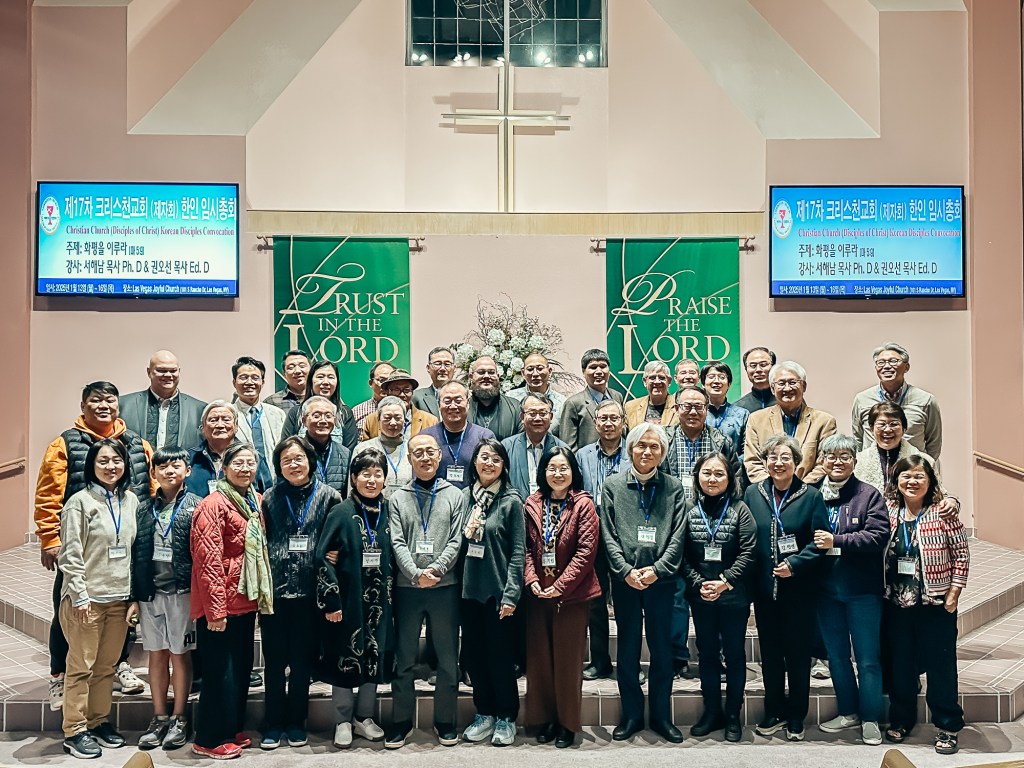
January 13-16, 2025, Las Vegas, NV
Paul Tché, member of the Korean Disciples Convocation
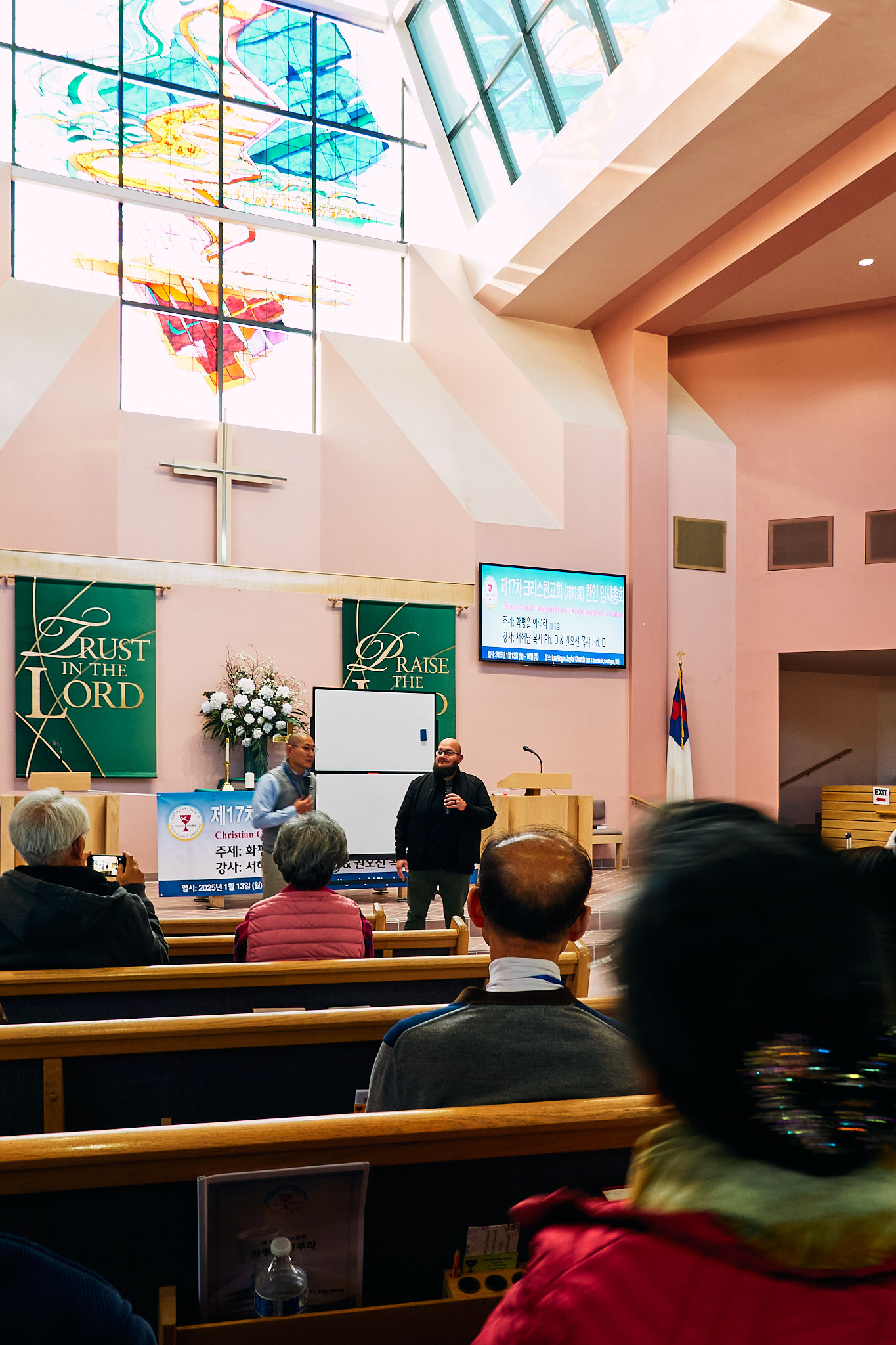
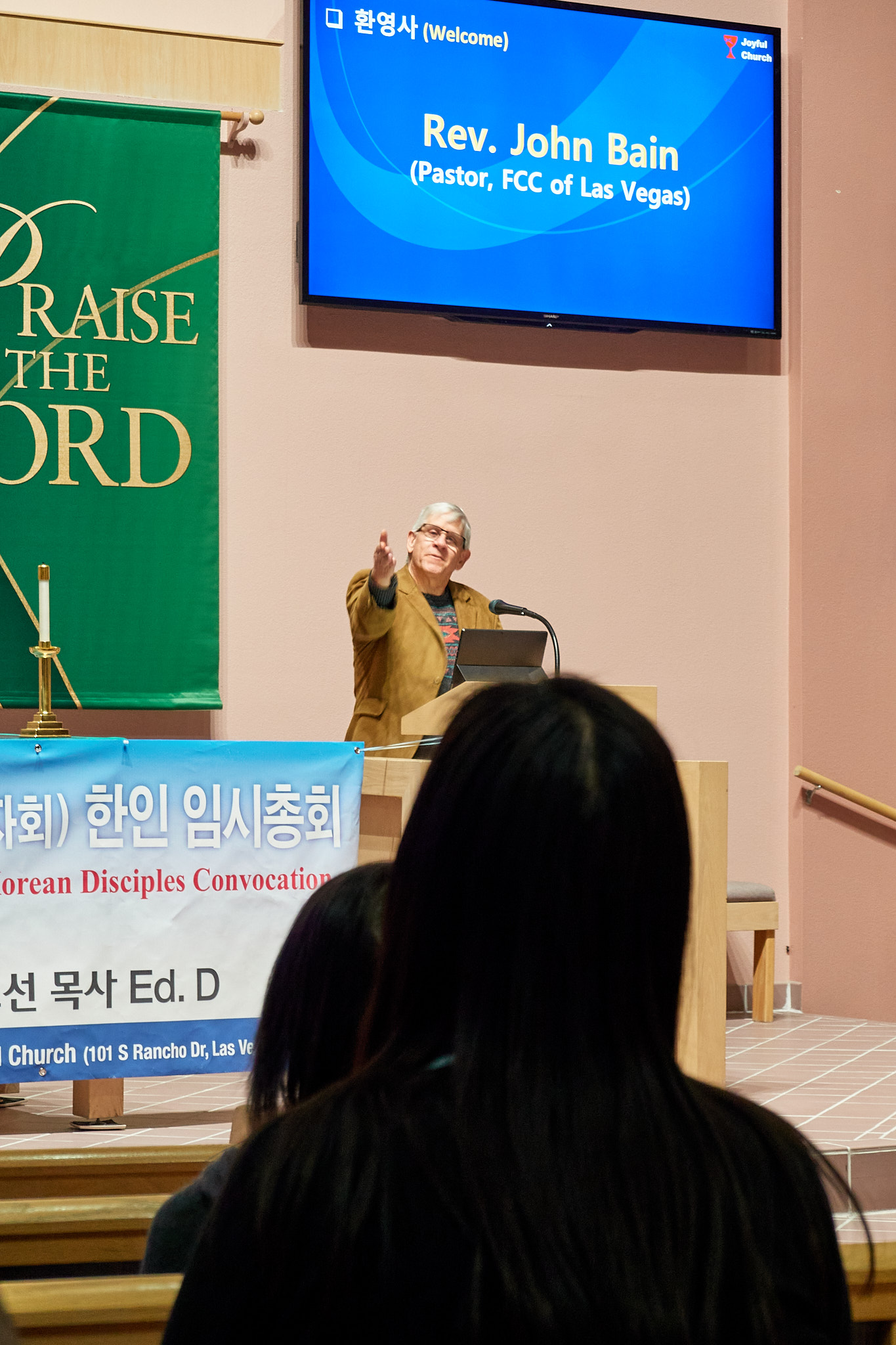
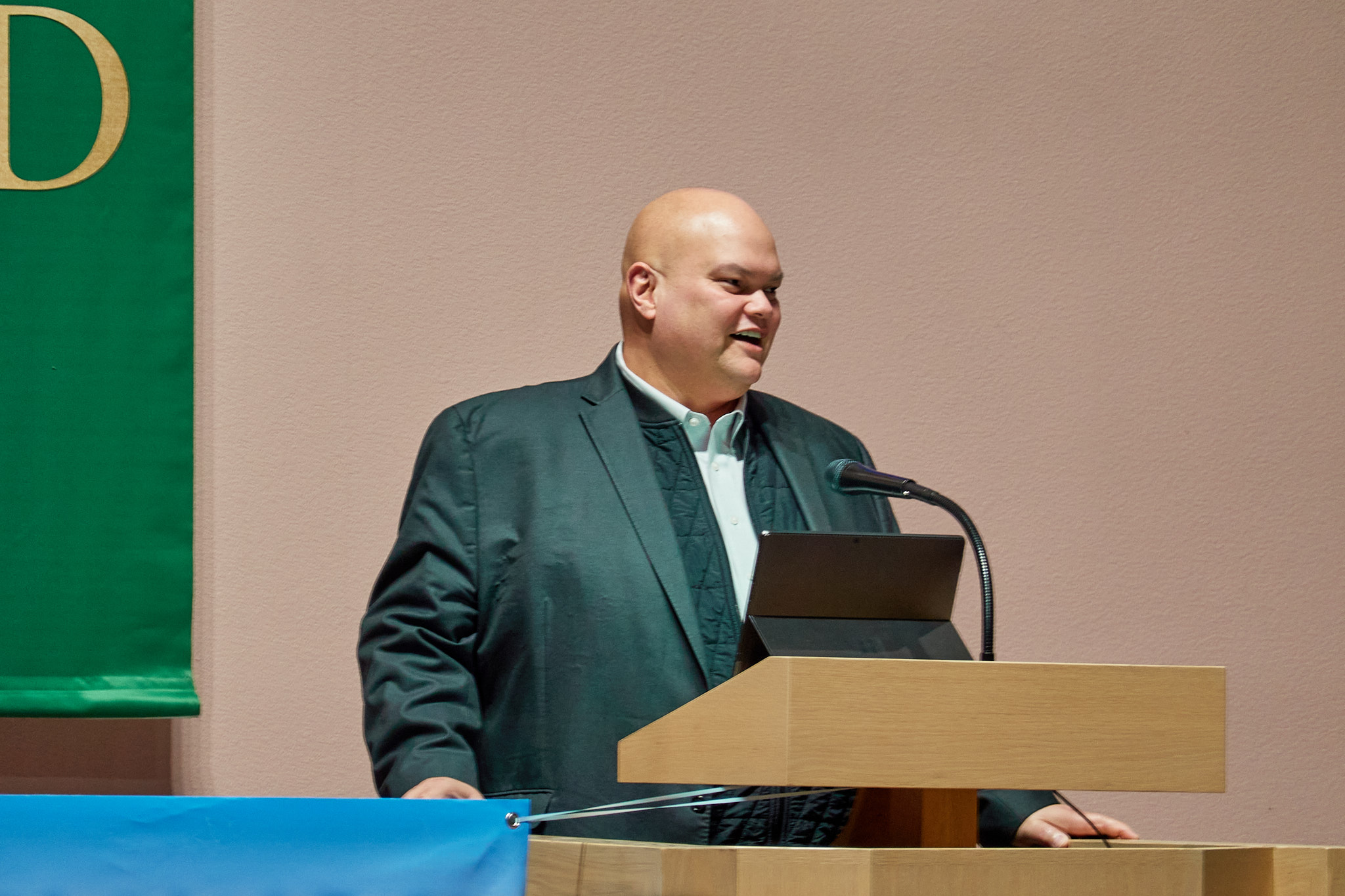
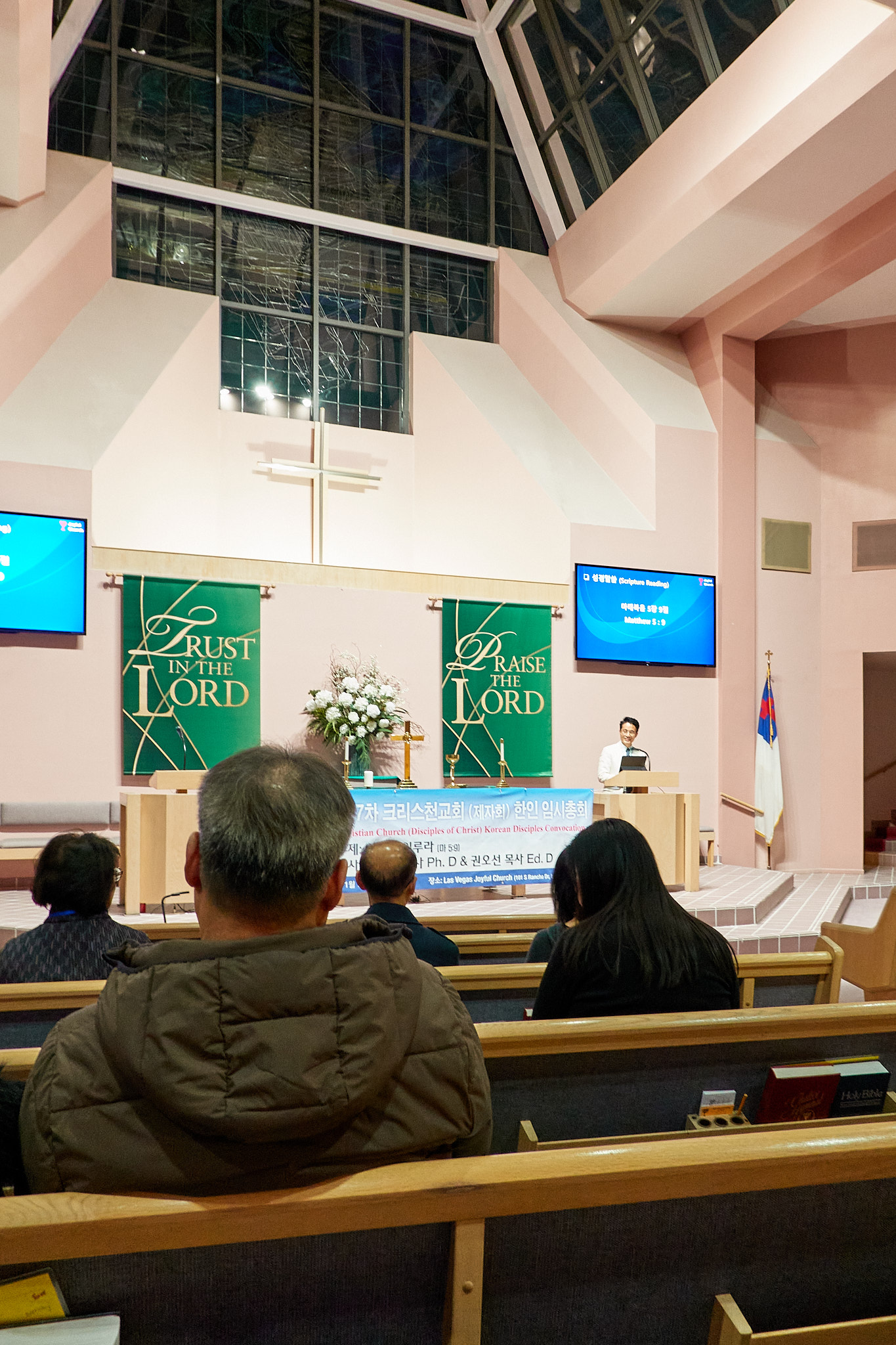
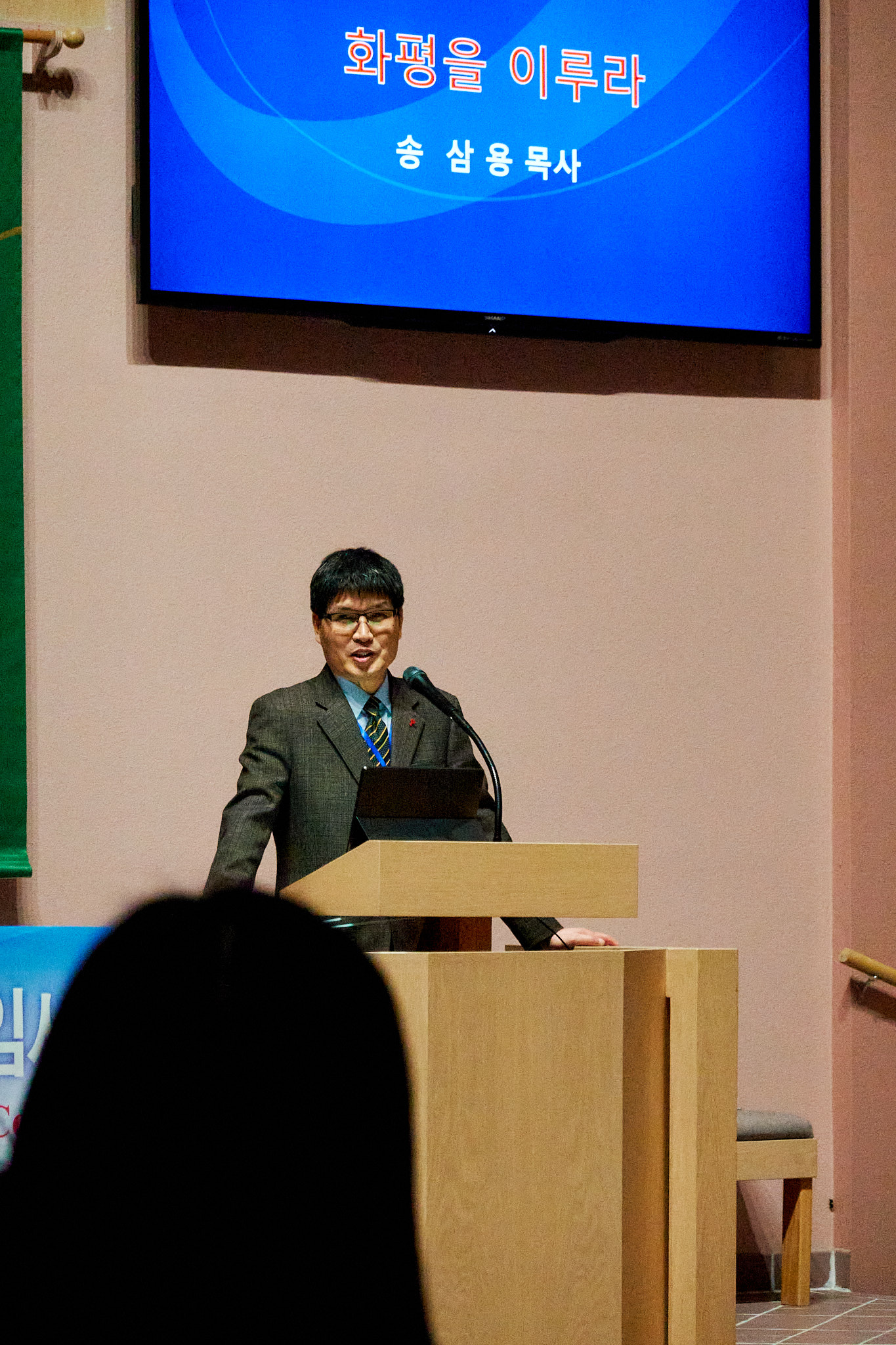
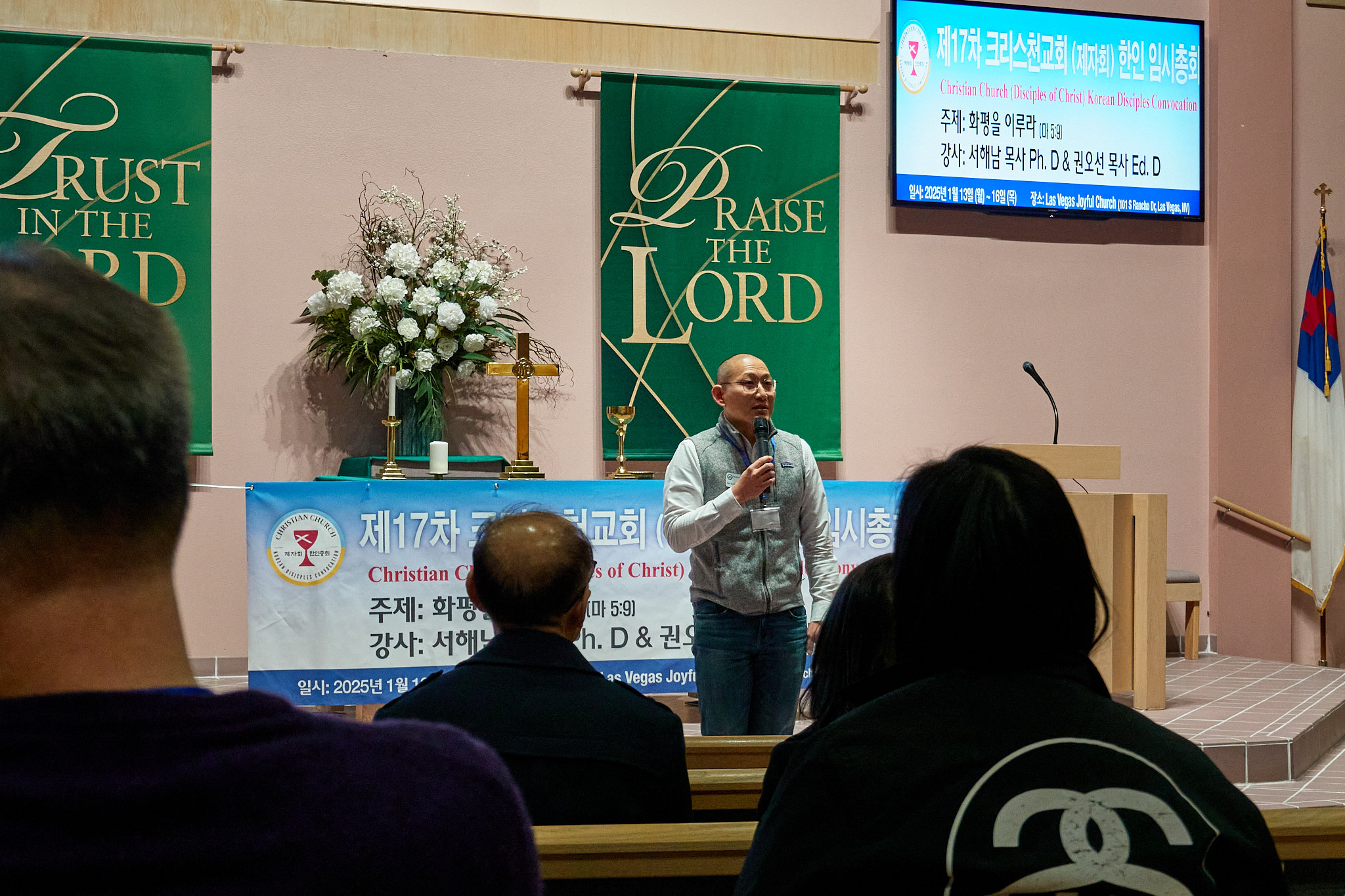
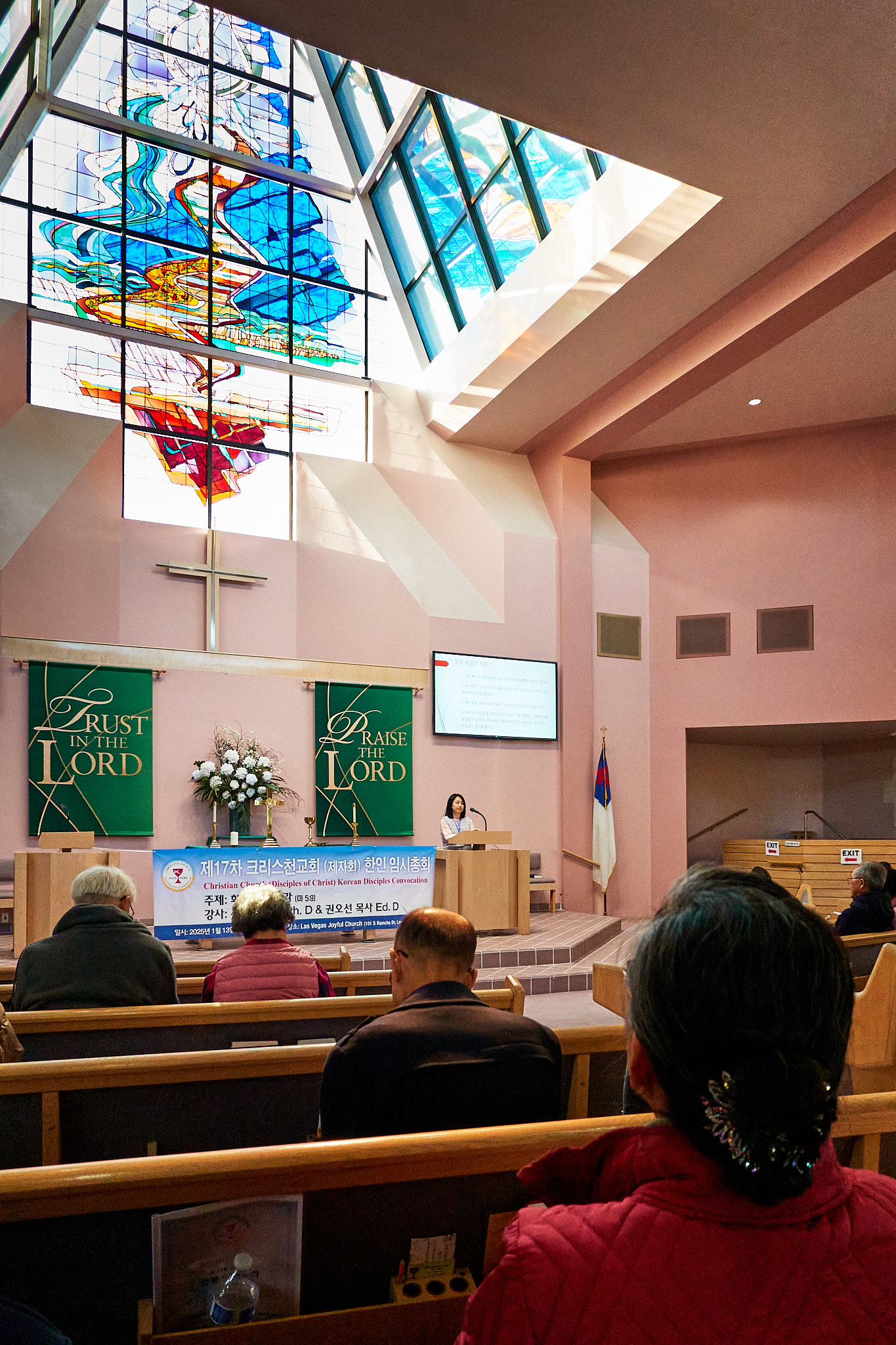
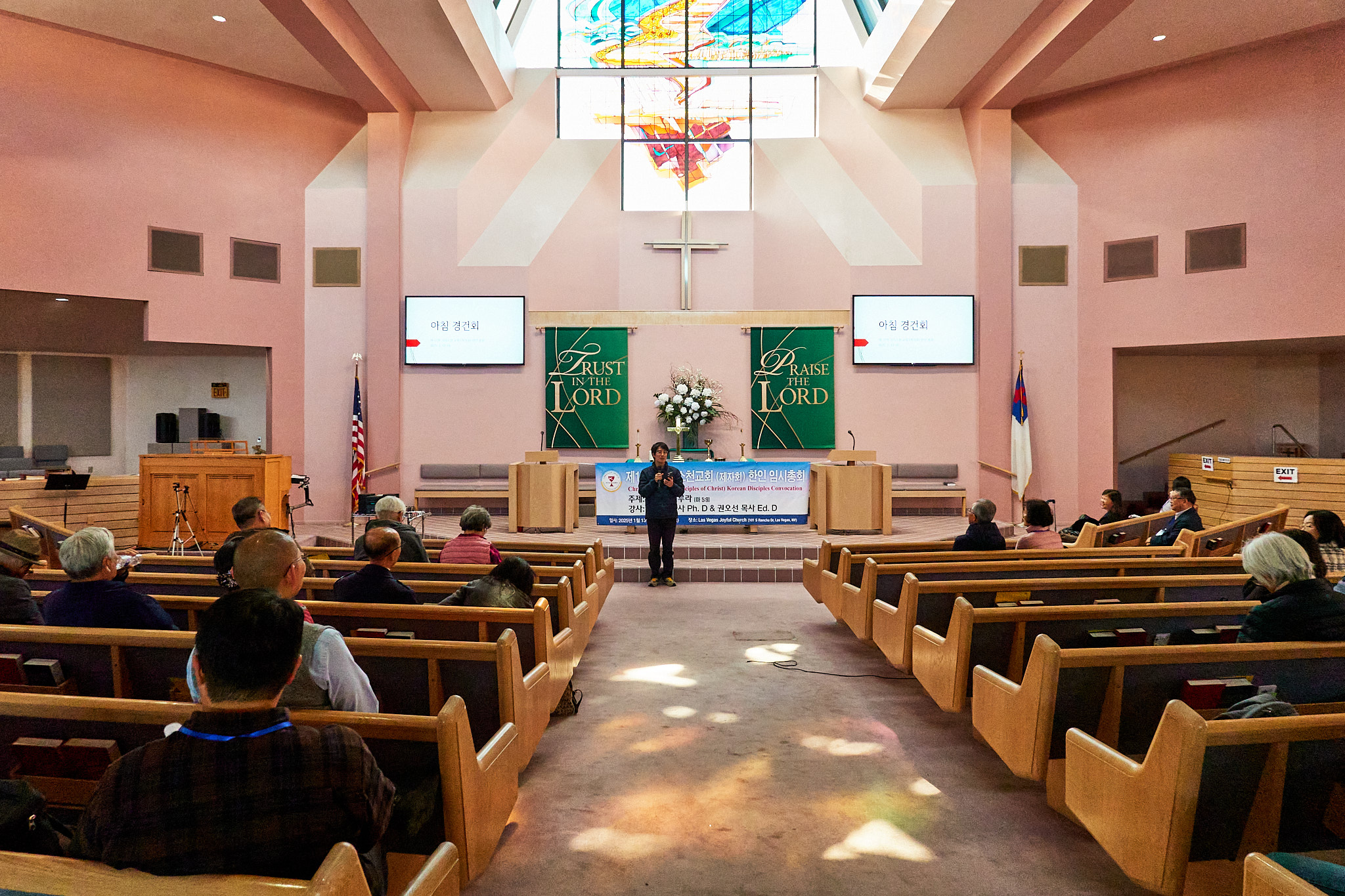
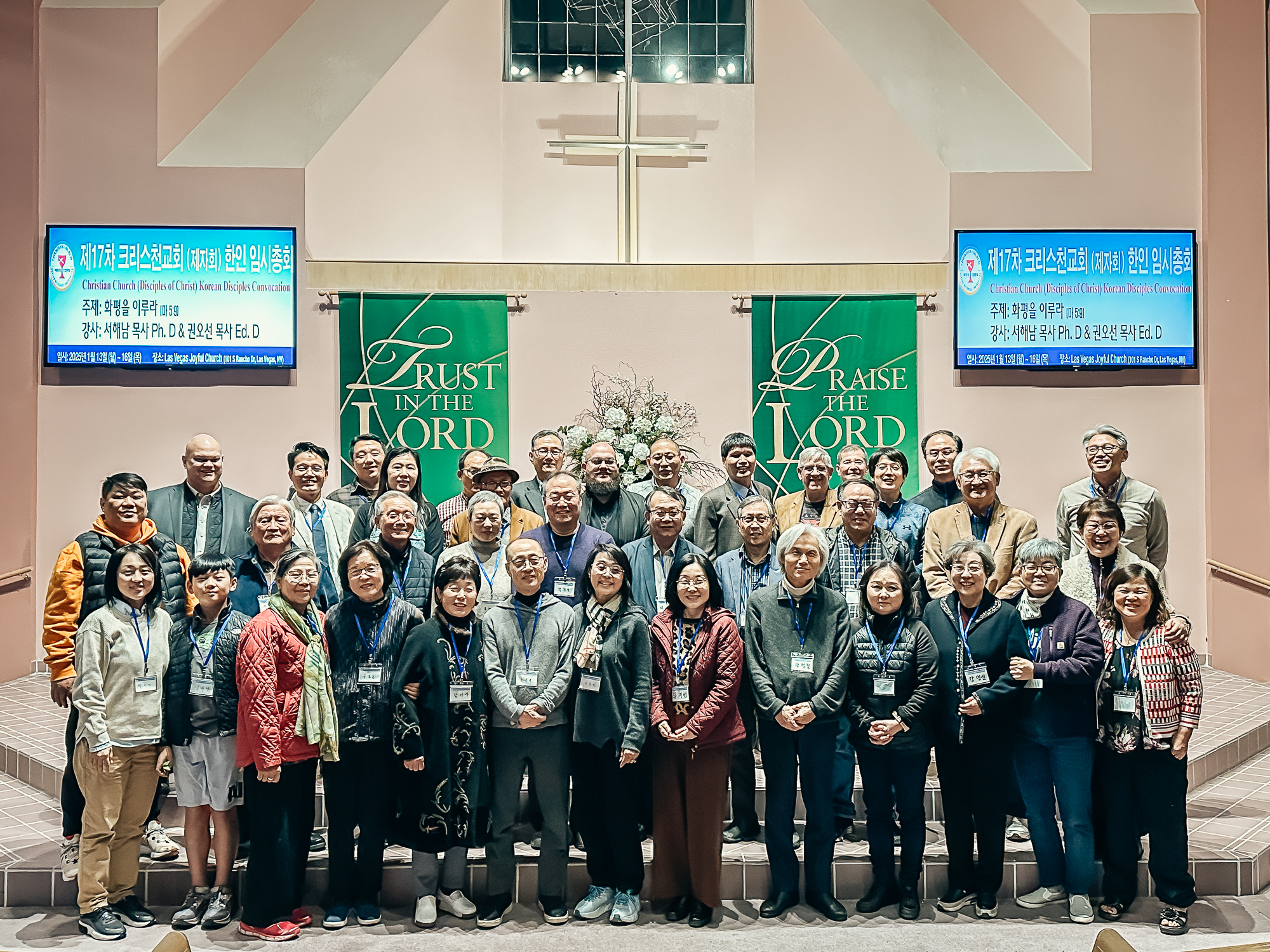
The annual gathering of Korean Disciples took place under the theme “Make Peace,” inspired by Matthew 5:9. This year’s event was hosted by Joyful Disciples Church, a Korean American congregation in Las Vegas. The gathering served as a platform for fellowship, spiritual enrichment, and dialogue. The keynote speaker, Rev. Dr. Hae Nam Seo, shared valuable insights on spiritual journeys and the practical use of the Enneagram as a tool for growth. The opening worship service featured a sermon from Rev. Song, pastor of Joyful Disciples Church, alongside greetings from Rev. John Bain, pastor of First Christian Church in Las Vegas, and Rev. Richie Sanchez, regional minister of the Pacific Southwest Region.
This gathering highlighted not only the significance of fellowship among Korean Disciples but also the pressing challenges faced by their congregations within the Christian Church (Disciples of Christ) in the United States and Canada. Over the past two decades, these congregations have experienced significant declines in membership. Many Korean pastors now juggle bi-vocational roles, working additional jobs to support their families and congregations. The financial hardships caused by the pandemic further compounded these struggles, leaving many congregations in precarious positions.
Cultural and theological diversity within the community also surfaced during the event. Some congregations continue to uphold traditional leadership models, emphasizing the role of a male pastor with a supportive spouse, often referred to as sah-moh-nhim. This traditional model, rooted in Korean heritage, is contrasted by congregations where spouses co-pastor or where pastors integrate ministry with other aspects of life. Theologically, the spectrum ranges from evangelical to mainline and fundamentalist perspectives, with differing stances on issues such as LGBTQ inclusion. This diversity reflects the broader character of the Christian Church (Disciples of Christ), which embraces varying interpretations and practices.
The influence of Korea’s cultural exports—music, television, films, and food—has established a global phenomenon often referred to as K-culture. This blend of localized identity and universal values resonates worldwide. A few years ago, during a keynote presentation, participants were invited to reflect on developing a distinctly Korean American expression of Discipleship, or “K-Discipleship.” However, given the theological and cultural diversity within the community, achieving a collective vision remains an ongoing challenge.
Encouragingly, some Korean Disciples congregations are exploring new ways to foster inclusivity and sustainability. Efforts to create multi-generational and multi-ethnic communities are emerging, aiming to bridge the gap between first-generation immigrants—who often hold traditional values—and younger generations navigating life as children of immigrants in a multicultural society. One congregation, for example, is working to become a multi-ethnic church with Korean and non-Korean members—a complex but inspiring effort.
Interestingly, while Korea’s recent political turmoil loomed large in many participants’ minds, the gathering refrained from addressing it formally. Recent events included the president’s declaration of martial law, impeachment by the National Assembly, and indictment by the National Prosecution Service. While some participants shared their thoughts informally, reflections during morning devotions offered only brief, objective mentions of these developments.
This silence reflects a broader hesitance within the Korean Protestant churches to address political issues. Historically, many Protestant denominations in Korea have been closely aligned with far-right political movements, often supporting policies and actions opposing diversity, particularly around gender and sexual orientation. This alignment has deepened tensions and divisions, leaving many concerned about the church’s role in fostering reconciliation and justice.
Despite these weighty issues, the gathering provided an invaluable space for informal conversations, which often extended into the early hours. For many participants, speaking in Korean was a source of comfort and joy, creating a sense of connection and belonging that transcended the formal agenda. Even in a vibrant city like Las Vegas, this opportunity to share freely and engage in meaningful dialogue felt uniquely fulfilling.
The annual gathering remains a vital occasion for Korean Disciples to connect, reflect, and envision the future of their faith communities amidst cultural and theological diversity. As the community continues to navigate its challenges, events like these offer hope and inspiration for fostering unity and renewal.
Disclaimer: This article reflects my personal thoughts and does not represent the official opinion of the Korean Disciples Convocation. I encourage you to reach out to other Korean Disciples to gain additional perspectives on this gathering.


 altimont